
We hold the prime.
You sign one contract.
Labour, materials, subcontractors, schedule, safety and turnover, all behind one agreement. You manage one relationship and we carry every other one on site.
Anyone can sign a fixed price. The question is whether they can still deliver it in month nine.

BC Legacy is BBB accredited, a member of HAVAN and the Canadian Home Builders Association, and works under BC 2-5-10 home warranty on residential projects. When we put our name on a prime contract, there is a contractor behind it that intends to be here for the warranty period.
Get in touchA track record you can actually check
Banny’s Market, the OSCC headquarters and production facility, Prime Storage in Burnaby, the Terra Group office, a boutique townhome community. Commercial, industrial and residential, delivered in this market.
Ask us for the reference on any of them. A general contractor whose portfolio cannot be verified is asking you to take the single largest risk on the project on faith.
Ask for references
We will tell you what the drawings are missing before we price them
Most contested change orders in BC are not a contractor behaving badly. They are a drawing set that went to tender before it was finished, and everybody found out in the field.
We price what the documents describe and we list the allowances and clarifications at bid time rather than discovering them at month six. It makes our number look less tidy than the competition. It also makes it the number you actually pay.
Send us a tender set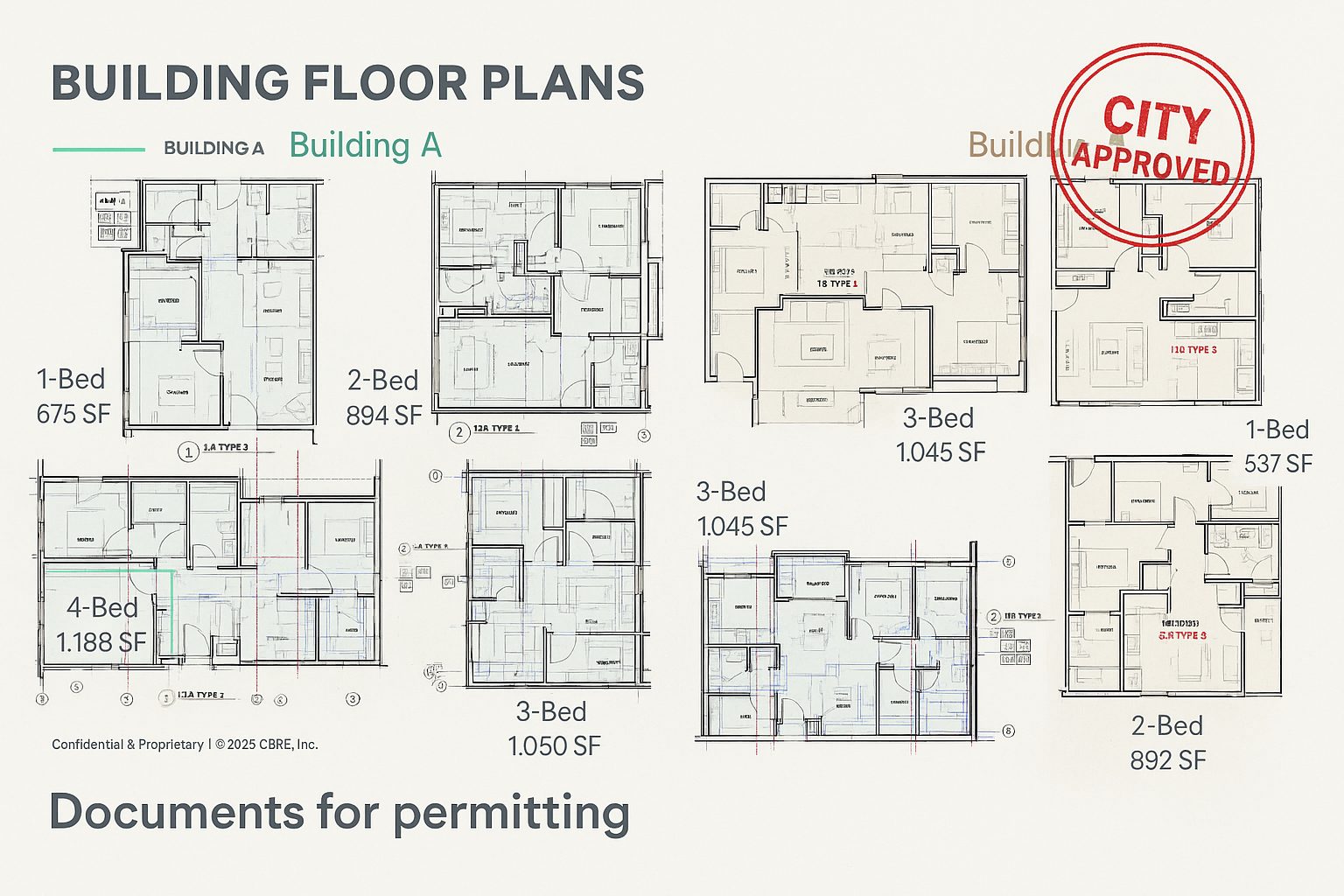
Closeout is scope for us, not goodwill
Deficiency lists that stay open, holdback that will not release, warranty calls nobody returns. These are the complaints that follow contractors around, and all three come from treating the end of a job as an afterthought.
Deficiency tracking runs through construction rather than starting at the end. Commissioning and turnover are scheduled activities with dates. Warranty service continues through the statutory period where the project is covered.
Talk to us about delivery
Stipulated sum, or cost plus with a ceiling.
Both are standard Canadian construction documents. The choice is governed by how complete the design is and how much price movement you can absorb.
Stipulated sum
A fixed contract price agreed once design is complete. The contractor carries the risk of buying the work for less than the contract price and the reward if they do. Maximum budget certainty for the owner, and the least flexibility once signed.
Cost plus, with optional GMP
Transparent cost plus a fee, with an optional guaranteed maximum price setting a ceiling. You see actual costs as they are incurred, and the guarantee caps your exposure once it is set.
Send the tender set.
A tender package, a design development set, or a concept with a budget attached. We respond within one business day with the contract structure that fits and what the documents still need.
General contracting, answered.
What is the difference between CCDC 2 and CCDC 3?
CCDC 2 is a stipulated price contract. The owner and contractor agree one fixed sum for the defined scope and the contractor carries the risk of delivering it for that number. CCDC 3 is a cost plus contract where the owner reimburses actual cost plus an agreed fee, optionally capped by a guaranteed maximum price. CCDC 2 suits complete drawings, CCDC 3 suits work that has to start before drawings are complete.
What is a guaranteed maximum price?
A GMP is a ceiling applied to a cost plus contract. The owner pays actual cost plus fee, but not more than the guaranteed maximum. It gives the transparency of cost plus with a bounded downside, and savings below the ceiling are shared or returned depending on how the contract is written. It only becomes meaningful once design is advanced enough for the ceiling to be set responsibly.
Who carries the schedule risk?
Under a prime contract the contractor does, subject to the extension provisions in the contract for owner directed changes, differing site conditions and force majeure. That is the substance of what a prime contract transfers, and it is why the terms governing delay and extension deserve reading before award rather than after a delay.
How are change orders handled?
A change order requires both entitlement and quantum: a reason the change falls outside the contracted scope, and a substantiated cost. We price changes against the same documents used at tender, and clarifications and allowances are declared at bid time specifically so that fewer changes arise later. Change orders that cannot be substantiated against the documents should not be paid, whoever the contractor is.
What warranty applies to a new residential project in BC?
New residential construction in British Columbia is generally covered by mandatory third party home warranty insurance, commonly described as 2-5-10: two years on labour and materials, five years on the building envelope and ten years on structure. Coverage and eligibility depend on the project type and the warranty provider, and commercial work sits outside that framework entirely.
Do you self perform any of the work?
Some scopes are self performed and the balance is subcontracted, with the split decided by what gives the project better control rather than by a fixed policy. Under a prime contract it makes no difference to your exposure, because the obligation to deliver sits with us either way.
Send the drawings.
We will tell you what is missing before we price it.
Every set has gaps. The question is whether they get found now or argued about in month six.